Claude Opus 5.5: prompting habits to drop and what actually changes

Anthropic has published a usage guide for Claude Opus 5.5, released on 22 September according to Frandroid, which reports on the document. The core message is counter-intuitive: several prompting habits carried over from earlier generations no longer help, and some actively delay the start of a response. Here is what the guide says, along with the caveats that come with it.
What is different in Opus 5.5
According to the source, the model reasons before every answer and decides on its own how much effort to spend. Anthropic presents it as the first in a new family of models. Two practical consequences follow: the reasoning phase no longer needs to be triggered by the user, and how you frame the request becomes the main lever on quality.
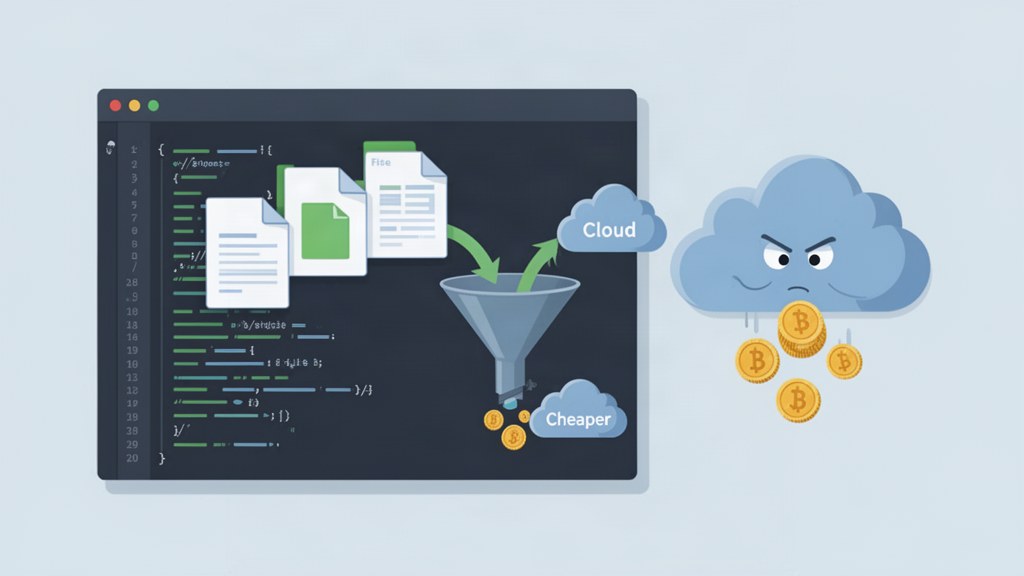
Anthropic also claims efficiency gains: Opus 5.5 is said to be 40% cheaper and 30% faster than Opus 5. Those figures come from the vendor and have not been independently verified at this point. The model is also described as more explicit about its actions and as putting the important information at the top of a response — a detail that matters when you are skimming a long output.
On availability, it is offered to Claude Pro, Max, Team and Enterprise subscribers, and through the standard app, with usage limits raised on those paid plans. Opus 5.5 is also described as the first Opus released with reinforced safeguards in biology and cybersecurity.
Habits worth dropping
"Think carefully" and "go step by step"
This is the most concrete point in the guide: such instructions are said to have become useless and to delay the start of the response. In Anthropic's own tests on a chatbot, removing "think carefully" made answers begin sooner with no visible drop in quality. That is an observation reported by the vendor about its own model, not an independent measurement.
Over-splitting into micro-steps
The guide instead recommends handing over the complete task in a single message, together with a clear success criterion. In other words: describe the outcome you want and how you will judge that it has been reached, rather than fragmenting the request into a dozen successive instructions. This does not remove the need to state context, constraints and output format.
Constant steering
Testers reportedly let the model run through coding tasks for hours with little supervision, according to the guide. Again, this is a reported observation, not a reproduced protocol. The takeaway: on long, well-scoped tasks, constant intervention is no longer necessarily the norm.
What this looks like in practice
Writing
Frame the request like a brief: goal, audience, tone, length, what must be included and what must be avoided. Since the model puts the essential points first, ask explicitly for the summary at the top if that is what you will read first.
Coding
In Claude Code, the effort level is set through a slider that appeared with the Opus 4.5 generation. The guide recommends writing in CLAUDE.md when the model should keep going on its own and when it should stop and ask. That file carries the project's autonomy policy, rather than repeating instructions in every session.
Analysis
Attaching charts, diagrams or screenshots directly is said to be more accurate than retyping the numbers. For a financial report or a dashboard, the image avoids transcription errors and preserves the original layout.
Keep the guardrails
Autonomy does not mean no oversight. The guide recommends keeping confirmations before risky actions: deleting data, sending code, or anything outside the project scope. These checkpoints are best defined up front in persistent instructions, rather than improvised mid-session.
Key takeaways
- Stop explicitly asking the model to think: it already does, and the instruction delays the start.
- Hand over the whole task in one message, with a verifiable success criterion.
- Set the effort level in Claude Code via the slider, and the autonomy policy in CLAUDE.md.
- Attach visual documents instead of retyping them.
- Keep explicit confirmations before any risky action.
Precision and uncertainty
The price, speed and performance figures come from Anthropic and have not been independently verified. The observations about long coding sessions are reported by the guide, not drawn from direct testing. The guide's content is attributed to Addy Osmani without clarification of his exact role. The launch date comes from the source, while a cited tweet carries a different date. A fast mode in preview with a per-token surcharge is mentioned without availability details.
Disclosure: this article is published by Roboto, a platform for generating texts, images, videos and voiceovers with AI. No testing was performed for this article; the material presented comes from Anthropic's guide as reported by Frandroid.
Source
« Pas besoin de lui demander de réfléchir » : voici les astuces pour bien utiliser Claude Opus 5.5