
How to Protect Your Data from AI Tools in 2025

Your next creation starts with a sentence. — free credits on sign-up Bring my idea to life
How to Protect Your Data from AI Tools in 2025
In a world where artificial intelligence is increasingly integrated into our daily lives, protecting our personal data has become a major issue. Technological advances in recent years have led to unprecedented democratization of AI tools, but this evolution comes with significant risks to our privacy. In 2025, understanding and implementing effective protection measures is no longer an option but a necessity. Let's discover together how to secure your personal information against artificial intelligence.
Why AI poses a risk to your personal data
Modern artificial intelligence works thanks to immense amounts of data. As a messaging app director recently pointed out, "AI depends on mass surveillance" to function effectively. This reality raises several fundamental problems:
- Massive and often non-consensual collection of personal information
- Analysis and cross-referencing capabilities that can identify individuals even from anonymized data
- Use of your data to train models that can then be commercially exploited
- Risks of leaks or hacking of training databases
Current AI systems like ChatGPT, Claude, or Gemini are trained on astronomical amounts of web data, potentially including information you have shared online. The artificial superintelligence that tech giants talk about will only intensify this trend.
Concrete measures to protect your data from AI
Audit and limit your digital footprint
The first step is to understand the extent of your online presence:
- Take an inventory of your accounts: Use tools like Have I Been Pwned to check if your data has already been compromised.
- Delete unused accounts: The fewer active accounts you have, the less exposed you are.
- Check your privacy settings: On all your social networks, choose the most restrictive options.
- Use AI detectors: These tools can help you identify when you are interacting with an AI that might collect your data.
Adopt protective technologies
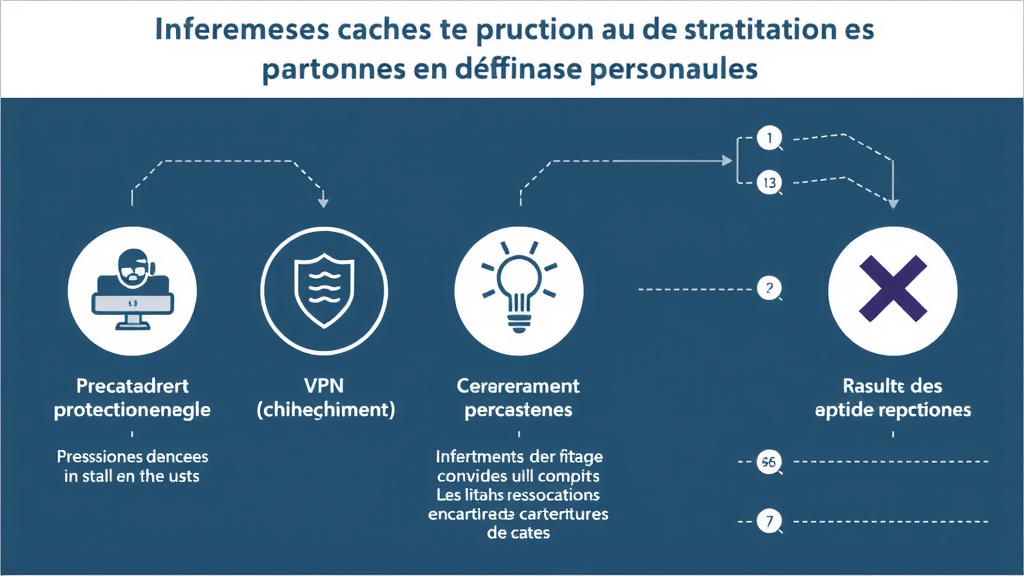
Several technical solutions can significantly strengthen your protection:
| Technology | Function | Effectiveness level |
|---|---|---|
| VPN | Hides your IP address and encrypts your connection | Moderate |
| Privacy-focused browsers | Block trackers and limit data collection | High |
| Encrypted messaging apps | Protect your conversations from surveillance | Very high |
| Password managers | Secure your accounts with unique passwords | High |
| Anti-tracking tools | Prevent tracking of your online activity | Moderate to high |
The combined use of these technologies creates an effective barrier against unwanted collection of your information. As shown by the recent AI revolution in the UK, massive investments in this field are not always accompanied by sufficient guarantees for data protection.
Manage your interactions with AI tools
When using AI-based services, adopt these best practices:
- Read the terms of use carefully, especially sections concerning the use of your data
- Never enter sensitive information (bank details, precise address, social security number) into an AI interface
- Use private browsing mode when visiting services like ChatGPT Search
- Regularly check the privacy settings of the AI tools you use
- Prefer solutions that process data locally rather than sending it to the cloud
Specific risks related to different types of AI tools
Not all AI tools pose the same risks to your data. Here is an analysis of the main categories:
Virtual assistants and chatbots
These tools, like AI conversation platforms, generally record your interactions to improve their service. They may retain personal information you share during conversations. To protect yourself:
- Use temporary or anonymous accounts when possible
- Regularly delete your conversation history
- Disable "personalization" options that involve analyzing your data
Creation and editing tools
Applications like Remini AI for photo restoration or Topaz Video AI for video enhancement require access to your personal media. To minimize risks:
- Prefer solutions that process data locally on your device
- Use watermarked or low-resolution versions of your sensitive content
- Check whether the app retains your files after processing and how to delete them permanently
Website and app creation platforms
Tools like WebWave AI or Web Sim may access sensitive business information. To strengthen your security:
- Create separate professional accounts distinct from your personal ones
- Do not integrate real customer data into your testing phases
- Check the security and GDPR compliance certifications of these platforms
The legal framework and your rights regarding AI
In France and Europe, you benefit from important legal protections thanks to the GDPR and other AI-specific regulations. The recent AB-316 law on algorithmic defenses also strengthens certain aspects of user protection.
Your fundamental rights include:
- The right to access your data collected by AI systems
- The right to rectify inaccurate information
- The right to erasure ("right to be forgotten")
- The right to object to the processing of your data
- The right to data portability
Do not hesitate to exercise these rights with companies that develop or use AI systems you interact with.
The balance between innovation and protection
With the emergence of technologies like new GenAI products, it is important to find a balance between benefiting from technological advances and protecting your privacy. Here are some principles to guide you:
- Assess the benefit/risk ratio before using a new AI tool
- Prefer solutions that are transparent about their data usage
- Support initiatives that develop privacy-respecting AI
- Stay informed about technological and regulatory developments
Conclusion
Protecting your data from AI tools in 2025 requires a proactive and informed approach. By understanding the risks, adopting best practices, and using appropriate protective technologies, you can enjoy the benefits of artificial intelligence while preserving your privacy.
As the debate on nationalist AI versus global collaboration shows, personal data issues are at the heart of current technological challenges. Take control of your information today to navigate this new digital landscape with confidence.
Want to try privacy-respecting AI tools yourself? Sign up for free at Roboto to discover a platform that puts data protection at the core of its approach.