Canva Craft: an image model that plans the layout before generating
Turn your idea into a professional visual — free credits on sign-up Create my first visual
Canva has launched its first in-house image generation model, called Canva Craft. According to The Verge, which reported the announcement, the tool is positioned directly against models from OpenAI, Microsoft and Google. Its distinguishing feature is its architecture: the model plans the design first, then generates the image. Canva presents this approach as a way to get more precision, consistency and control.
For teams producing brand visuals, the stakes are concrete: a generator that understands composition before drawing can reduce back-and-forth. But the vendor's promises are not a substitute for independent evaluation, and the source provides no real quality tests.
Two stages instead of one: what changes
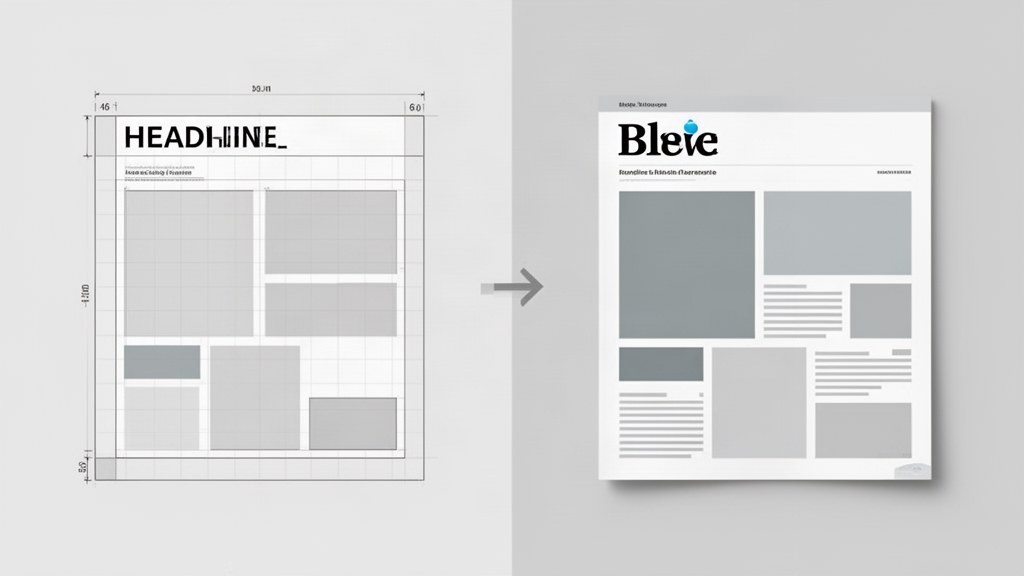
Most image generators start from a text prompt and produce an image directly. Canva Craft separates the work: a first stage plans the layout, a second generates the visual. Canva claims this organization handles readable text and precise object placement better.
For a brand visual, these two points are often the most fragile: a misspelled headline or a misplaced logo is enough to make an image unusable. A model that "thinks through" composition upstream could therefore limit rework. At this stage, however, this is a vendor claim, not a result measured by a third party.
Formats, resolution and announced use cases
Canva says Craft generates images up to 2K resolution and in more than 30 image formats. The model is presented as capable of creating realistic scenes, digital art and marketing visuals. This range of formats matches the common needs of a marketing team: social posts, banners, presentation visuals.
Canva also says it trained Craft on millions of human-created templates from its library, which includes social posts, presentations, infographics and menus. This base likely explains the model's "design" orientation: it is not just about producing a beautiful image, but a visual that fits into a medium.
Using Craft for brand visuals in French
The source does not detail how the model behaves with French text. It is reasonable to assume that the readable-text handling highlighted by Canva concerns English first, but this is not confirmed. For French-language use, it is therefore better to plan for systematic checking of spelling and typography before publication.
A few cautious principles, consistent with the announced features:
- Describe the desired composition precisely (placement of the headline, logo and secondary elements) rather than relying on the model to guess.
- Check generated text, especially in French, and correct it in the Canva editor if needed.
- Choose the format suited to the final medium among the more than 30 announced formats, to avoid cropping.
- Keep a reference brand style guide and compare proposals before validating.
Access and availability
Canva Craft is available now to all users worldwide, according to the source. It is accessed via the three-dot option in Canva's left-hand menu, then by selecting Dream Lab. The source does not specify quotas, exact terms of use or possible country restrictions: these points remain to be checked in the interface.
Canva also announces faster versions, Craft-fast and Craft-ultrafast, without a release date. The vendor also plans to connect AI agents to Craft via the open Model Context Protocol, without detailing how this integration concretely works.
Moderation, privacy and security
Canva announces moderation controls on inputs and outputs, privacy and security measures, as well as reporting tools. For a brand, these safeguards matter as much as visual quality: they determine what can be published and what can be entrusted to the tool. The source does not detail how these controls work.
Where Craft stands against OpenAI and Google
According to the crowdsourced Design Arena ranking, Craft is fourth among the best image generation models. It ranks behind GPT-Image-2.5 Sunburst, GPT-Image-2.5 Flare and GPT-Image-2 from OpenAI. This ranking is a participatory benchmark, not a scientific evaluation: it gives an order of magnitude, not a definitive truth.
The comparison with OpenAI and Google generators should therefore remain cautious. Canva highlights integration into its design tool and the two-stage architecture; competitors are cited by the source as the models to beat, without a detailed performance comparison. No independent test is available in the source to settle the question.
Key takeaways
- Canva Craft is Canva's first in-house image model, with a two-stage architecture: planning, then generation.
- Canva promises more precision, consistency and control, particularly on readable text and object placement.
- The model generates up to 2K and in more than 30 formats, and is available now via Dream Lab.
- The Design Arena ranking places Craft fourth, behind three OpenAI models; it is a crowdsourced benchmark.
- Real performance, quotas and behavior with French text are not documented by the source.
For a team already working in Canva, Craft has the advantage of being integrated into the production tool. For a brand that depends on tightly controlled visuals, caution remains warranted until independent evaluations are available.
Source
Canva’s first AI image model plans designs before generating them