Gemini Tasks: Google's free autonomous agent rolls out in six countries, not yet France
Your next creation starts with a sentence. — free credits on sign-up Bring my idea to life
Google has begun rolling out Gemini's "Tasks" mode for free to hundreds of millions of users across six countries: the United States, Japan, Korea, Canada, Australia and India. The idea is to hand the assistant everyday tasks it executes in the background, without the user watching every step. For French-speaking creators, the announcement is interesting in principle, but it comes with a major caveat: France is not on the rollout list, and no availability date has been given.
This article is based on reporting by Developpez.com. Because the source article is paywalled toward the end, some details about safeguards remain partial; we flag this where relevant.
What Gemini Tasks actually does
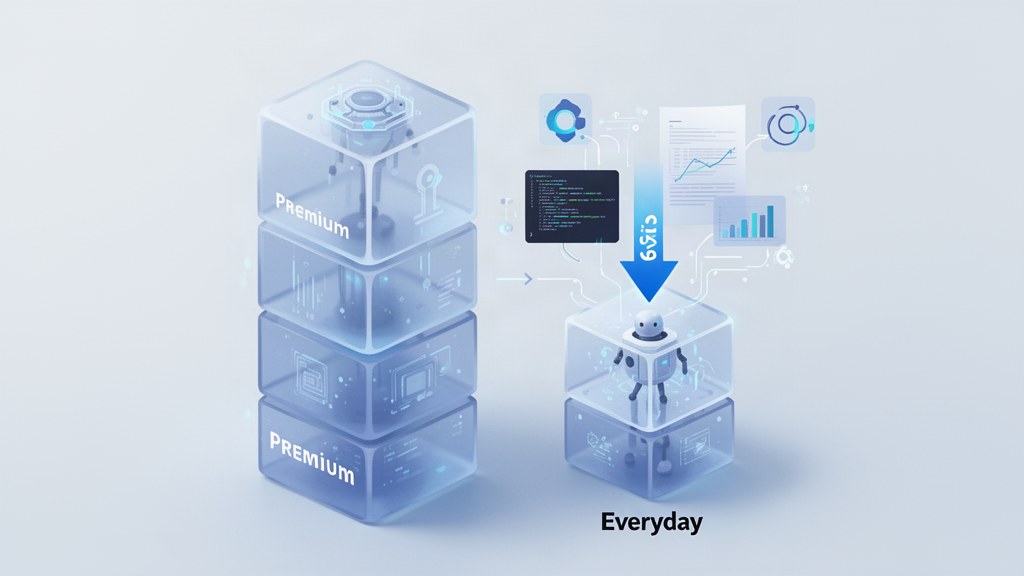
Tasks turns Gemini from a conversational assistant into an agent that acts: it can chain actions on the user's behalf. The rollout relies on a new model, Gemini 4 Hydrogen, announced on 12 November for developers, businesses and the general public.
Among the usage examples cited by a Google vice-president, the source mentions calling car dealerships, analysing invoices and adding groceries through Instacart. These are cases reported by Google, not observations from independent testing: how representative they are of everyday use is not established.
Gemini is said to integrate with more than 60 apps, and developers can apply to join the connected-apps platform. That app layer is what lets the agent act inside third-party services rather than just answering in a chat window.
Purchases, payments and spending caps
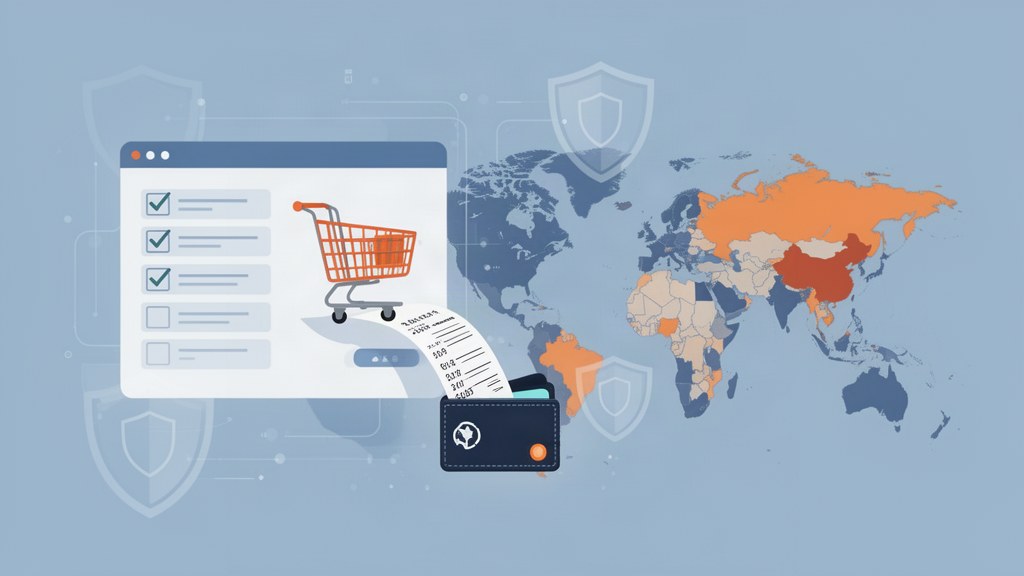
The most sensitive part concerns purchases. Gemini can carry out transactions via the Agent Payments Protocol (AP2), using digital tokens, in partnership with Mastercard and Visa, with American Express expected to follow. According to the source, users keep the points, cashback and protections tied to their cards when Gemini makes the purchase.
A strict spending cap can be set in advance, and receipts and tracking are forwarded to Google Wallet. That is a useful guardrail for a creator delegating purchases of gear or supplies: the maximum amount is known before execution, and traceability runs through a dedicated wallet.
Security: what the source documents
Google describes several isolation and control mechanisms:
- each task runs in a hardware-isolated virtual machine, dedicated to a single account, within Google Cloud's Agent Compute Engine;
- prompt-injection filters analyse web content, and Safe Browsing limits the links Gemini can open;
- Gemini is designed to ask for confirmation before critical steps, such as clicking "Buy", and to ask questions when instructions are ambiguous;
- users can mark routine actions as "Always allow", adjust settings, disconnect apps or delete history.
These are the elements Google communicated through the source. Since the article is truncated for subscribers, it is unclear whether additional limits exist, or which task types are explicitly refused.
Pricing and the underlying model
Tasks is announced as free for users in the six countries concerned. The Hydrogen model itself is priced at $1.50 per million input tokens and $7.50 per million output tokens, with a 1-million-token window. That pricing applies to model access, not to consumer use of Tasks.
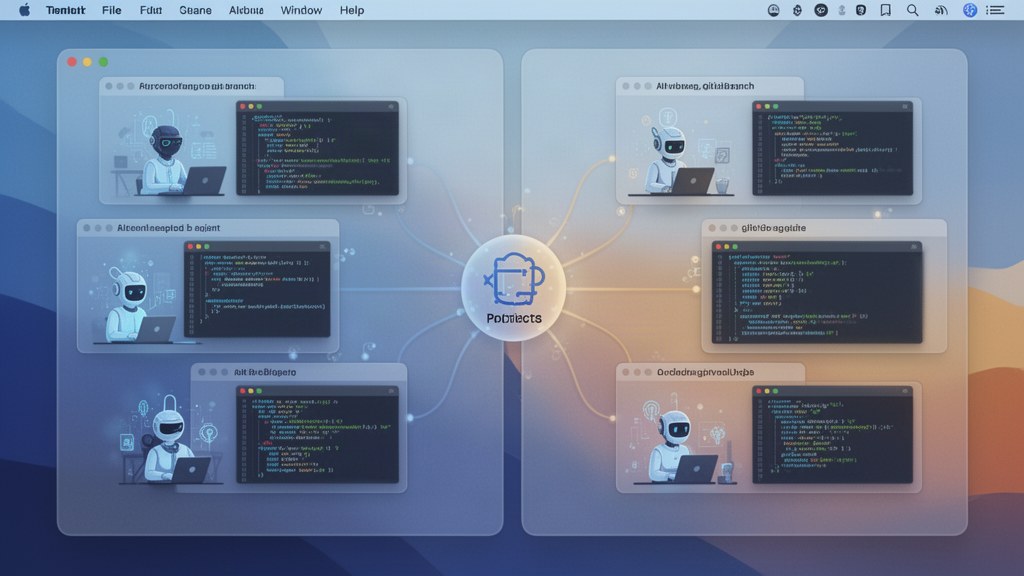
The source also mentions Orchestrator in Google Antigravity, which lets users switch between different models within a single session. It is an architectural detail that points to where this is heading: agents able to pick the right tool or model for each step.
What it means for a French-speaking creator
Three points deserve to be kept separate.
1. Availability
France is not among the rollout countries cited, and no date or access condition is specified. A creator based in France therefore cannot count on Tasks in the near term based on this announcement. Users in the six listed countries are covered from the rollout onward.
2. Which uses actually transfer
The examples cited (calls, invoices, groceries) are everyday and logistical. For a creator, the value lies mainly in repetitive, low-stakes tasks: order tracking, price comparison, preparing lists. Creative tasks themselves are not described in the source, and it would be unwise to assume their scope.
3. Comparison with Claude Duet
The source does not cover Claude Duet. We therefore cannot establish a factual comparison between the two on the basis of this document: not on features, not on availability, not on pricing. Any serious comparison table would require sources dedicated to Claude Duet, which this brief does not provide.
Key takeaways
- Free rollout of Gemini Tasks in six countries: US, Japan, Korea, Canada, Australia, India.
- Gemini 4 Hydrogen model, announced 12 November, with developer pricing of $1.50/M input tokens and $7.50/M output tokens.
- Guarded purchases: AP2, Mastercard and Visa partnerships, spending cap, receipts in Google Wallet.
- Isolation and confirmations: per-account virtual machine, anti-injection filters, confirmation before critical steps.
- France not covered at this stage, with no announced date.
- Comparison with Claude Duet not documented by the source.
In short, Gemini Tasks marks a shift from the assistant that answers to the agent that acts, with a payment and isolation framework designed to reassure. But for a French-speaking creator, the main issue is timing: as long as France is not on the list, the tool belongs to watchlist rather than practice.